
VALUE CREATOR FOR CUSTOMERS
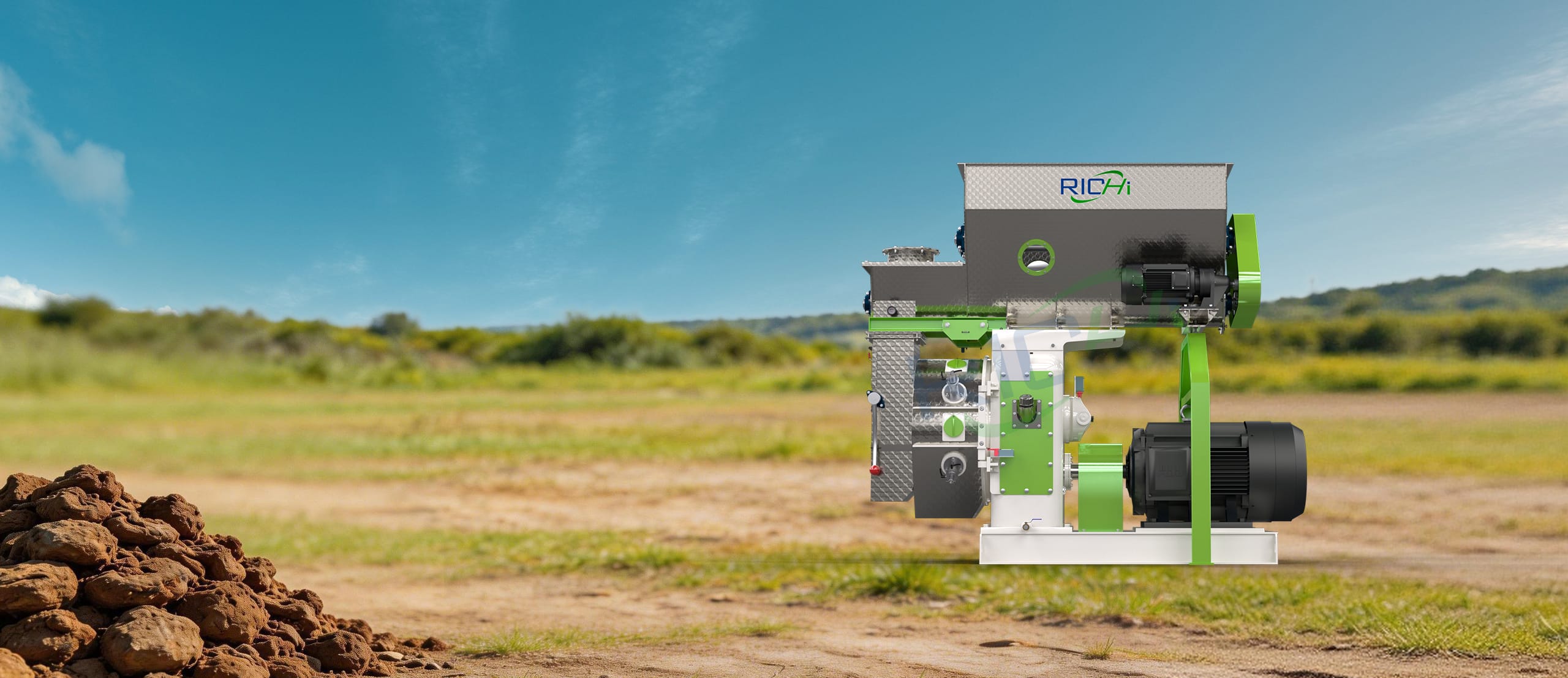
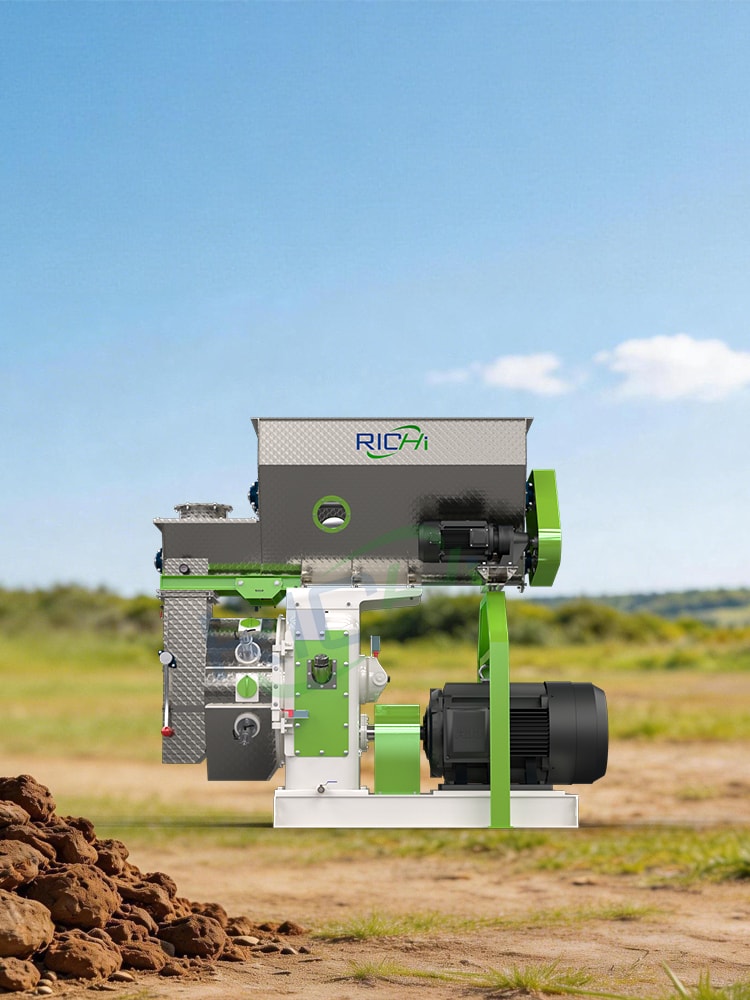
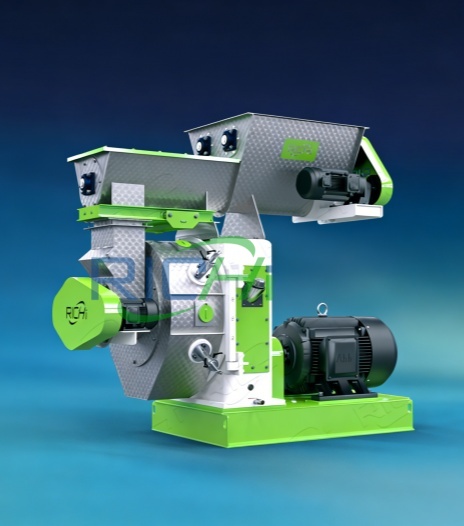
COW DUNG PELLET MAKING MACHINE
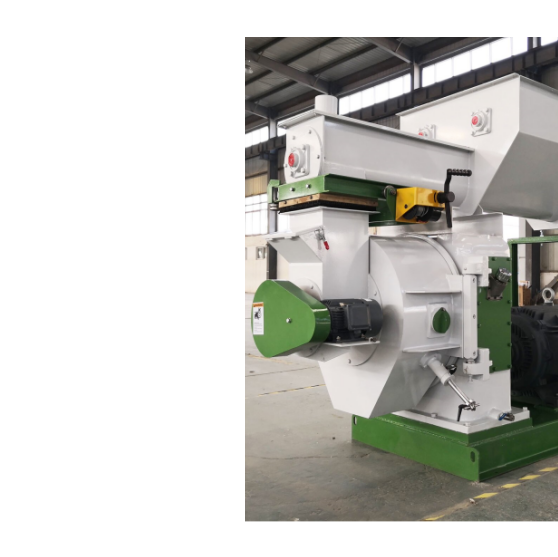
The cow dung pellet making machine is essential for dung recycling, converting cow dung, horse dung, and other organic materials into products like organic fertilizers and fuel pellets. It is ideal for large farms and fertilizer or biofuel production plants. Using the cow dung pellet mill provides both environmental benefits and economic value.
Output
1-26 T/H
Price
$7000-$100000
THE VALUE OF COW DUNG
Cow dung is a common by-product of large-scale cattle farming and agricultural recycling. When processed correctly, it can be turned into valuable products like fertilizers, energy, substrates, and animal feed, making it a great example of turning waste into resource.
Fertilizer Use
Cow dung is commonly used as fertilizer due to its high mineral content and undigested plant residues. It is an ideal raw material for organic fertilizers, which are perfect for organic crops, flowers, and farmland.
Where can it be applied?
Energy
Large farms can use biogas digesters to convert cow dung into biogas for electricity generation. The dung can also be processed into fuel pellets for burning or sale.
Substrate and Feed
Cow dung, along with rice straw and crop residues, can be composted into substrates for mushroom cultivation or used as feed for protein-rich insects.
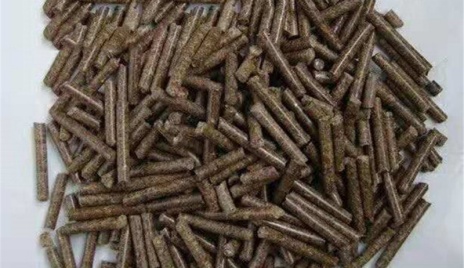
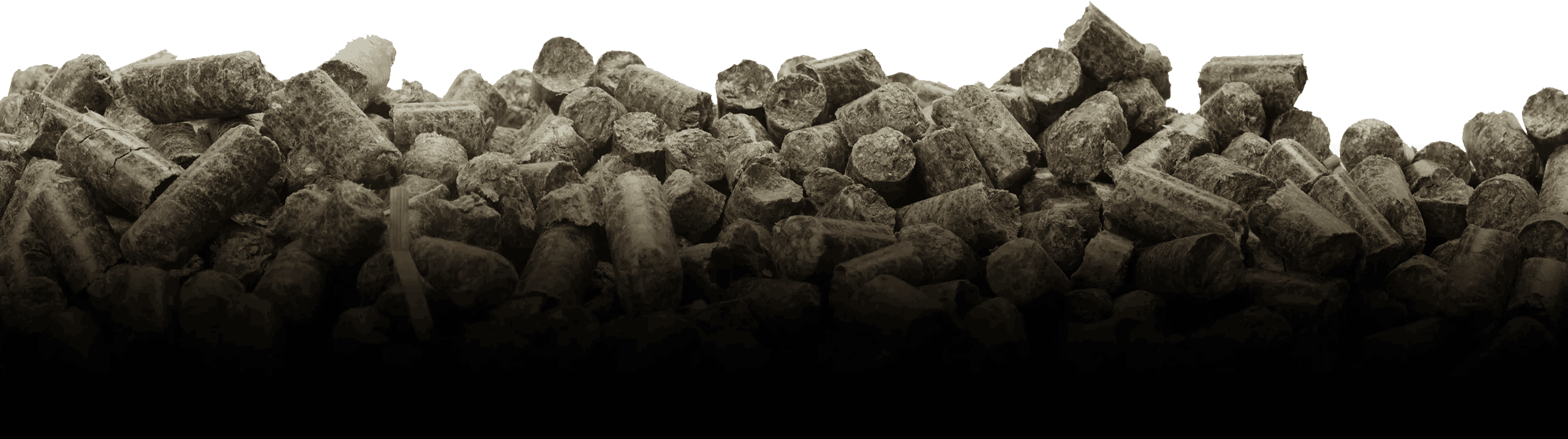
Cow Dung Pellets
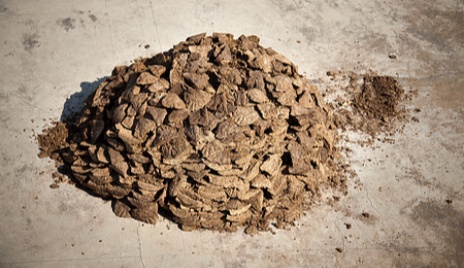
Dried cow dung
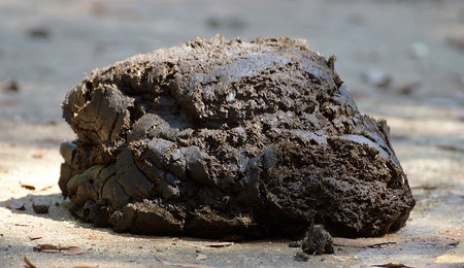
Wet cow dung
WHY USE A COW DUNG PELLET MAKING MACHINE
After recognizing the economic value of cow dung, a cow dung pellet making machine is used to convert it into a value-added product. The machine processes loose and perishable cow dung into dense, dry pellets, greatly improving storage, transportation, and marketability, while maximizing its overall value.
Solve dung disposal problems
Cow dung has high moisture content and large volume, which can cause odor, pests, and environmental pollution when stored outdoors. Large-scale farms also face high disposal costs and environmental risks. The RICHI cow dung pellet making machine converts dung into dry, dense pellets, reducing odor and volume while making transportation easier.

Increase dung value
Raw cow dung is difficult to use and may cause pollution if not properly treated. After pelletizing, it can be used for fertilizer, biomass energy, heating fuel, and cultivation substrates. This process transforms waste into a valuable and environmentally friendly resource.
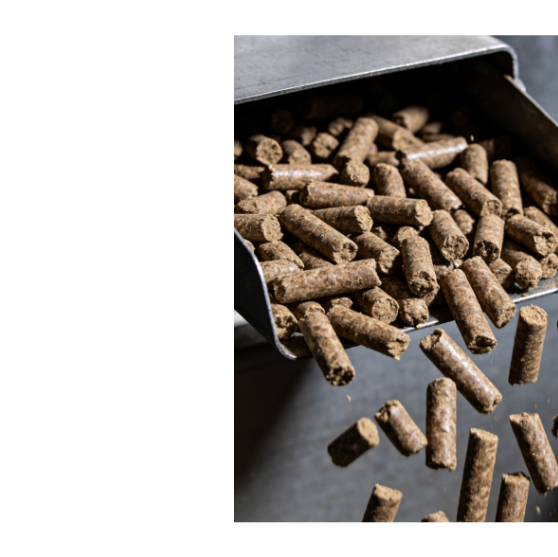
Convenient Storage and sales
Loose cow dung is expensive to transport and usually processed near its source. Pelletizing greatly reduces its volume, making packaging, storage, and transportation more efficient, and allowing products to be sold to wider markets.
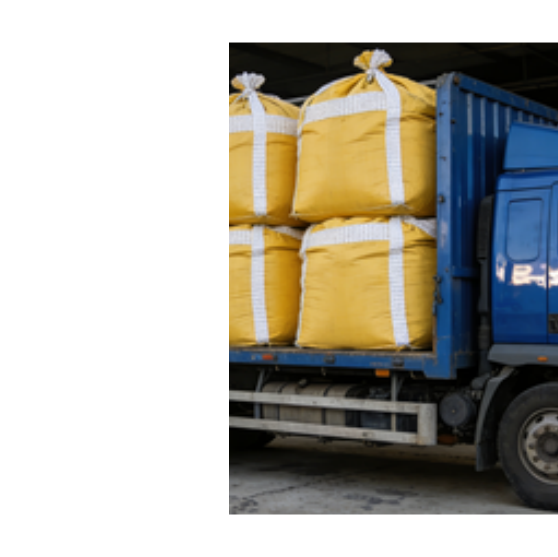
Achieve economic benefits
The RICHI cow dung pellet making machine is power-driven, easy to operate, and labor-saving. It offers stable performance, high efficiency, and reliable continuous operation, helping users achieve efficient manure recycling and long-term economic benefits.
COW DUNG PELLET MAKING MACHINE VIDEO
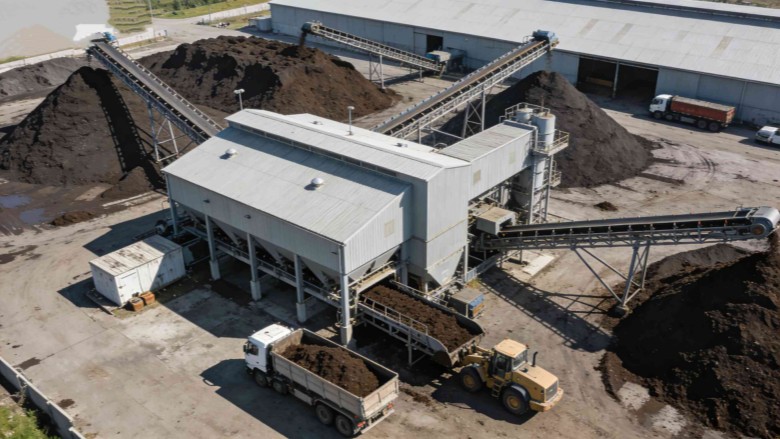
To give you a clearer understanding of our cow dung pellet machine and cow dung pellet production line, we have prepared the following videos for your reference.
Video Showcase

Video Showcase

Video Showcase
COW DUNG PELLET MAKING MACHINE MODELS
To meet different production requirements, RICHI Machinery offers seven models of cow dung pellet making machines with capacities ranging from 1 to 26 T/H. The detailed specifications are listed below. If you are unsure which model suits your needs, please contact us for professional guidance.
| Model | FZLH250 | FZLH320 | FZLH350 | FZLH420 | FZLH520 |
|---|---|---|---|---|---|
| Main motor power(KW) | 22 | 22 | 37 | 90 | 132 |
| Forced Feeder Power(KW) | 0.75 | 0.75 | 0.75 | 1.5 | 1.5 |
| Ring Die Diameter(MM) | 250 | 320 | 350 | 420 | 520 |
| Pellet Diameter(MM) | 4-12 | 4-12 | 4-12 | 4-12 | 4-12 |
| Output Capacity(T/H) | 1-1.5 | 2-3 | 3-5 | 6-8 | 9-12 |
ADVANTAGES OF RICHI COW DUNG PELLET MACHINE
RICHI Machinery is a leading designer and manufacturer of complete pellet equipment with decades of experience. Our cow dung pellet making machine uses advanced technology and high-quality materials to ensure efficient, stable, and energy-saving granulation. It is durable and suitable for a wide range of materials.
Ring Die Process
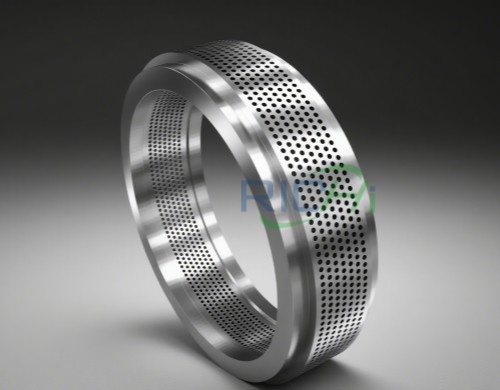
The ring die process is the most efficient and advanced pelletizing method. Compared with flat die systems, it offers higher output, more stable pellet quality, better wear resistance, and longer service life. Its continuous feeding and discharge make it ideal for large-scale production.
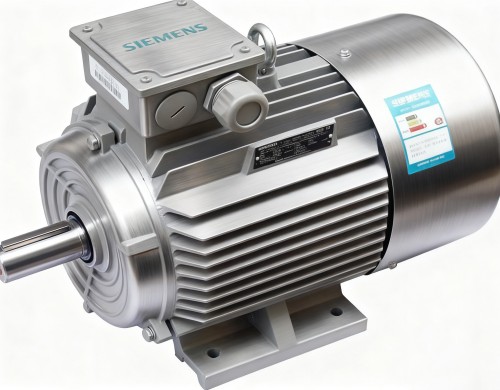
Imported motor and Bearings
We use imported SKF bearings and Siemens motors as the main drive components in our cow dung pellet mills, ensuring strong stability and long service life. SKF bearings feature low friction and high durability, reducing maintenance and replacement costs. Siemens motors deliver reliable, long-term power for high-intensity operation.
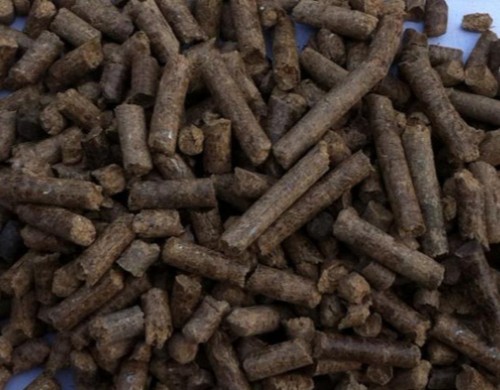
Up to 98% pelletizing rate
Our cow dung pellet mill achieves a pelletizing rate of up to 98%. Once the pre-treated material meets the required moisture and particle size, it is fed into the pellet machine where the ring die and pressure rollers form uniform pellets. The resulting pellets are consistent, stable, and high quality.
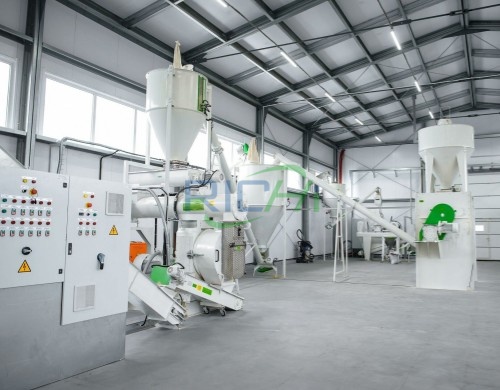
Seamless integration into production lines
RICHI Machinery not only manufactures standalone equipment but also provides complete production line solutions. Our pellet mills can be fully integrated with supporting equipment to achieve highly automated production, reduce labor costs, and improve overall efficiency.
AVAILABLE RAW MATERIALS
During cow dung pellet production, material conditions and end uses can vary. Therefore, RICHI Machinery’s cow dung pellet machine offers wide raw material adaptability and can process mixtures that include straw, stalks, rice husks, peanut shells, and more.

Fresh Cow Dung
High-moisture cow dung containing undigested feed and other impurities.
Dried Cow Dung
Dried and hardened dung that can be crushed, re-moistened, and pelletized.
Fermented Cow Dung
Fully fermented dung with about 30% moisture, ideal for organic fertilizer production.
Mixed Cow Dung
Cow dung blended with additives such as straw or rice husks.
WORLDWIDE COW DUNG PELLET MAKING MACHINE PROJECTS
RICHI Machinery has been established for 30 years, with our products exported to over 140 countries and regions. We’ve successfully set up numerous pellet production lines and earned widespread trust and support. Here are some of our project cases. For more information, please contact us.
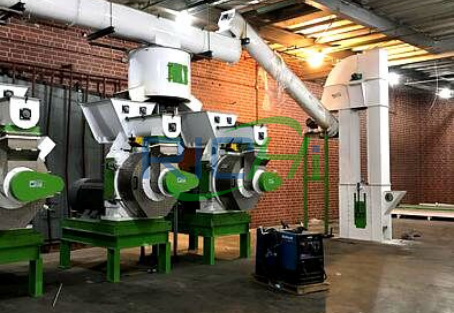

Russia 6-8T/H Project
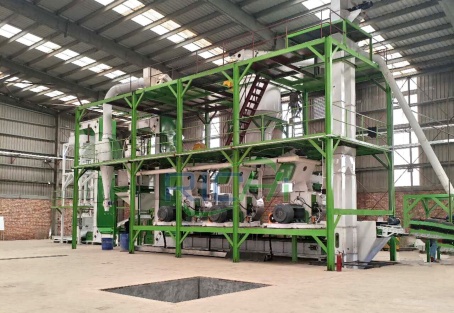
Located at a dairy farm in Russia, this project mixes fresh cow dung with wheat straw to produce organic fertilizer pellets for fertilizing wheat and sunflowers.

Canada 12T/H Project
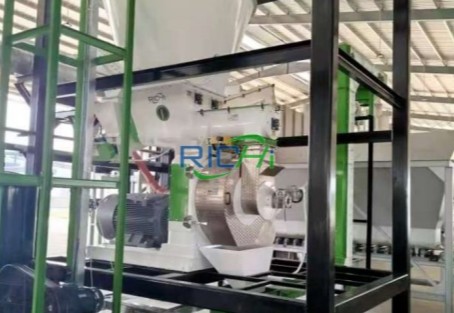
Based in Alberta, this cattle farm combines cow dung with canola meal to produce high-quality organic fertilizer pellets for vegetable cultivation and barley production.


Nepal 6T/H Project
A cooperative of local farmers in Nepal uses cow dung mixed with rice husks to produce fuel and fertilizer pellets for vegetable cultivation and daily fuel use.

France 3-4T/H Project
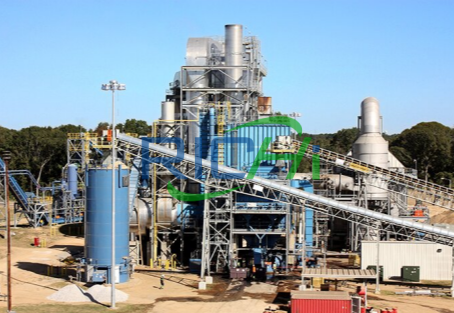
At a dairy farm in France, cow dung is mixed with apple pomace to create organic fertilizer and fuel pellets, used for fertilizing apple orchards and providing fuel for cider farms.

USA 20T/H Project
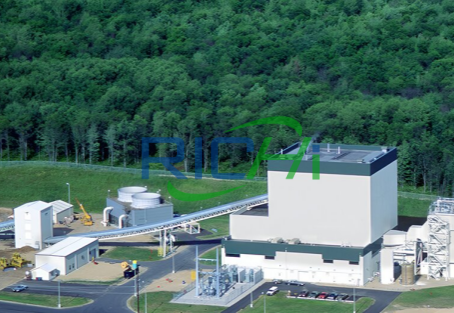
This large dairy and processing farm in Wisconsin operates two pellet production lines, combining cow dung with corn straw to produce organic fertilizer and fuel pellets for sale.

Pakistan 5-6T/H Project
This cattle farm in Pakistan processes cow dung together with wheat straw to produce organic fertilizer pellets for application in wheat and sugarcane fields.
Inquire for Details
These projects are only a few examples. For more information about cow dung pellet machines, production lines, or related equipment, please contact us. We will help you find the best solution and build an efficient pellet production line.
PELLETIZER DESIGNED FOR OTHER RAW MATERIALS
In addition to cow dung pellet making machines, we also offer other pellet machines, including chicken manure pellet machines, organic fertilizer pellet machines, cat litter pellet machines, biomass pellet machine, and coco peat pellet machines. You can choose the right machine based on your raw materials and application.
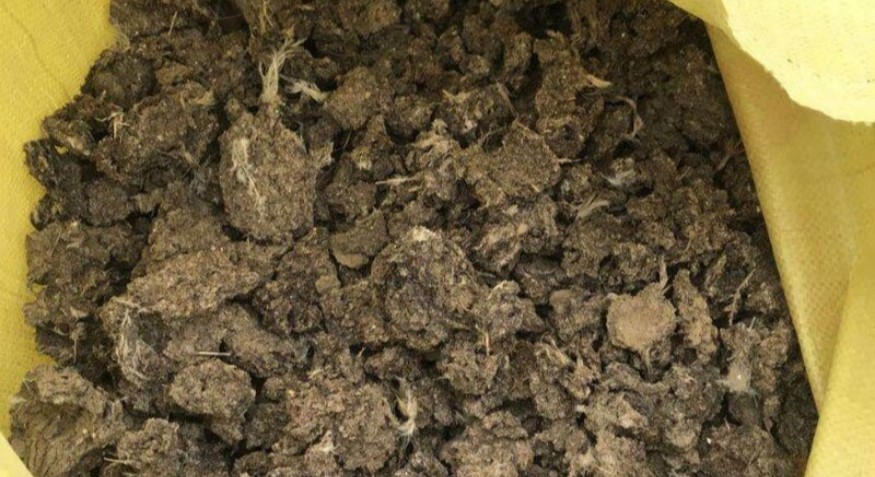

chicken manure Pellet Machine
The chicken manure pellet machine processes fermented chicken manure into uniform organic fertilizer pellets. It enhances nutrient content, reduces odor, and facilitates storage and transport, converting livestock waste into high-value, ready-to-use fertilizer for agricultural applications.
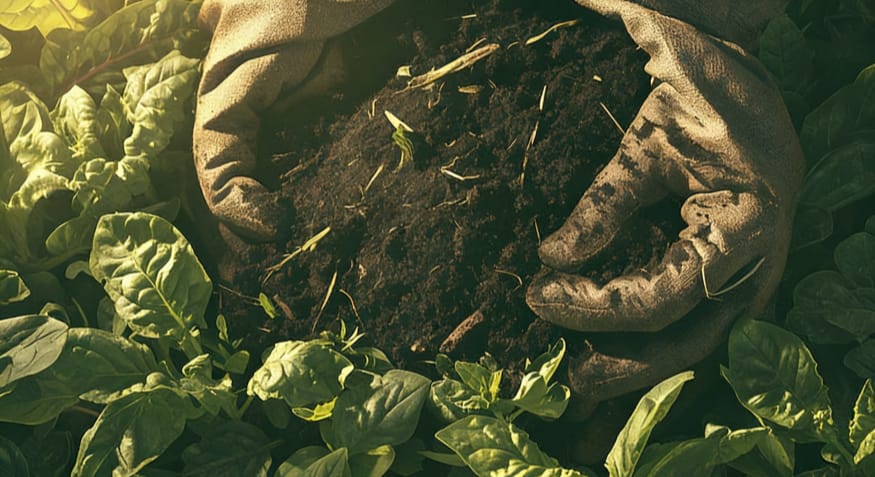
Organic Fertilizer Pellet Machine
Used for making organic fertilizer pellets from animal dung, straw, rice husks, and other organic materials. It is widely used to improve soil fertility and nutrient supply for crops.
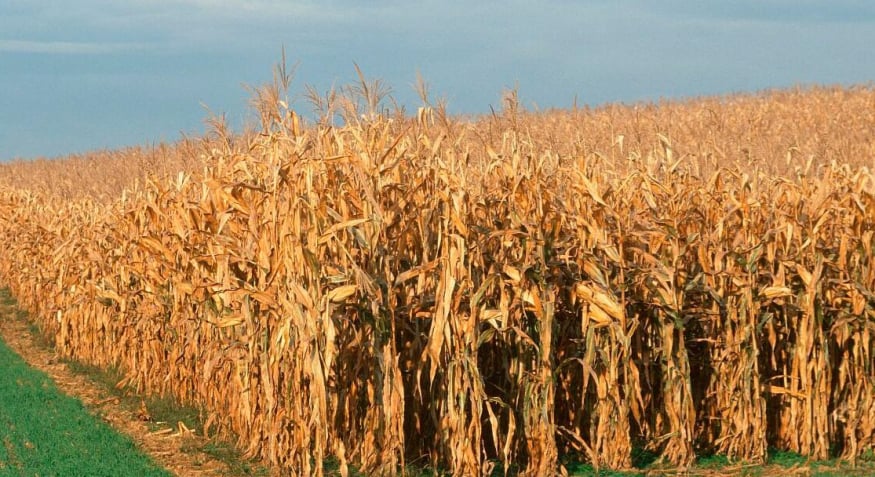
Biomass Pellet Machine
Processes agricultural and forestry wastes such as wood, straw, rice husks, and peanut shells into high-density pellets. It helps reduce waste and provides an eco-friendly energy source.
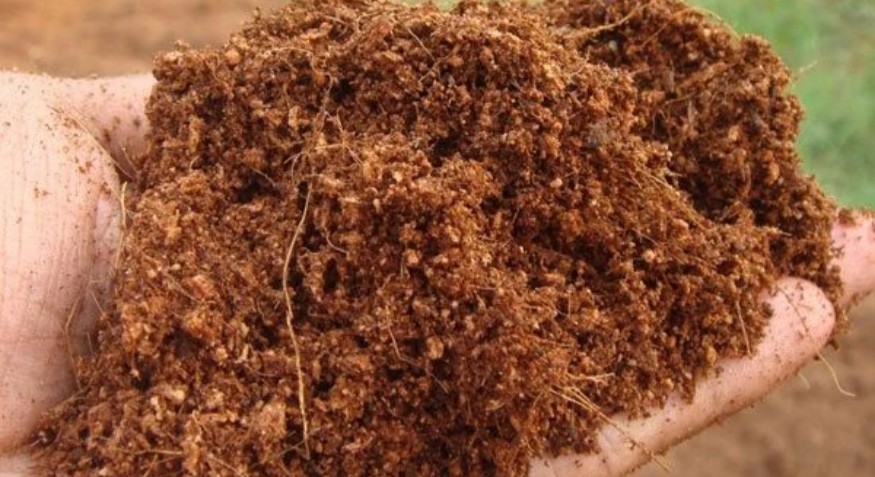
coco peat Pellet Machine
The coco peat pellet machine compresses processed coco peat into compact pellets. These pellets are easy to store and transport, expand rapidly with water, and are ideal for seedling cultivation, hydroponics, and horticultural growing media, efficiently utilizing coco peat resources.
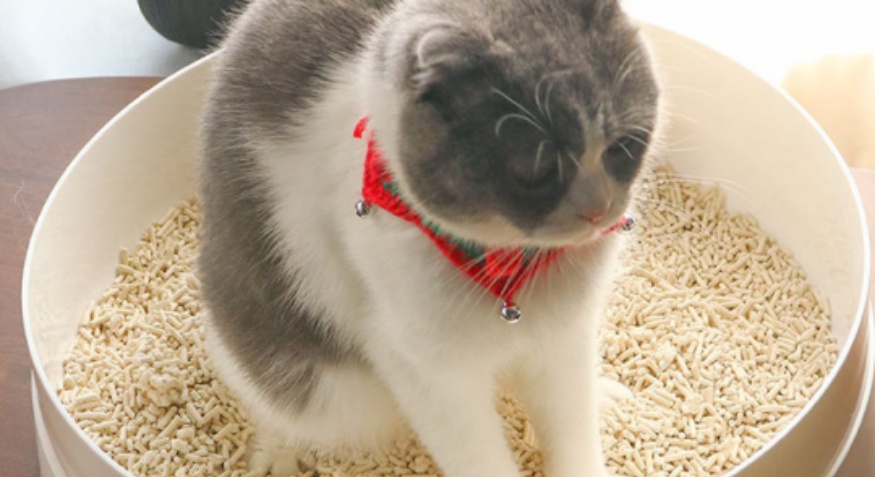
CAT LITTER PELLET MAKING MACHINE
Produces pellets for animal bedding. It is suitable for materials like bentonite, soybean hulls, sawdust, pine, clay, peanut shells, cassava, corn cobs, waste paper, and more.
COW DUNG PELLET PRODUCTION LINE
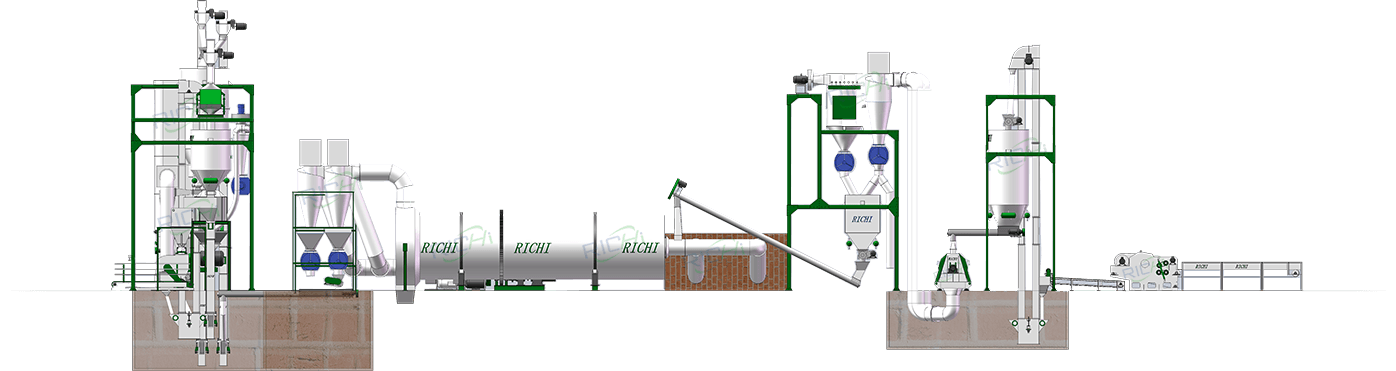
We offer a highly automated pellet production line that ensures efficient granulation and stable pellet quality while reducing labor requirements. The result is a cost-effective, reliable, and high-efficiency production line. Generally, a cow dung pellet production line includes the following steps:
01
Raw Material Cleaning
Remove impurities and hard objects to protect the equipment.
02
Raw Material Crushing
Crush large chunks to ensure uniform material size.
03
Raw Material Drying
Adjust moisture to 13–18% to ensure smooth pelletizing.
04
Material Mixing
Mix additives evenly with cow dung for consistent pellet quality.
05
Pelletizing
Feed the pretreated material into the pelletizer, where it is formed into dense, uniform pellets by the ring die and rollers.
06
Drying and Cooling
Cool the hot pellets to improve hardness and durability.
07
Screening and Packaging
Remove broken or unformed pellets and package the final product for storage and transport.
08
Auxiliary Systems
A complete line also includes conveying, storage, and dust removal systems for smooth and environmentally friendly operation.
Production Line Equipment powerhouse
Cow dung pellet production requires not only the core pelletizing equipment but also a range of auxiliary machines to complete the process. We provide a complete set of production line equipment. In addition to offering individual machines for sale, we also design and configure production lines tailored to the specific characteristics of raw materials, production scale, and factory conditions. Below are the related equipment we offer.
Crushing
Bale Breaker
When mixed and pelleted with straw-based materials, it can be used to break up bundled raw feedstock.

Material Crusher
The raw materials are crushed to a particle size of 3-5mm.

Drying
Tumble Dryer
Reduces the moisture content of wet materials to around 15%.
Belt Dryer
A belt dryer uses a conveyor belt and hot air to dry materials continuously.
Cooling
Counterflow Cooler
Cools the finished pellets to near room temperature.
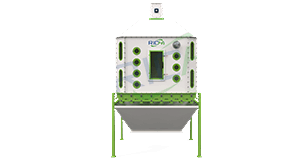
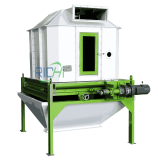
Pellet Cooler
Used to reduce the temperature of finished pellets.
Screening
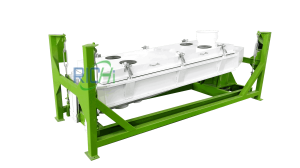
Vibrating Screen
Removes powder and broken particles from the finished pellets.
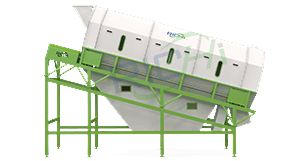
Rotary Grading Screen
Rotary Grading Screen is a cylindrical screening device that uses a rotating drum to separate and classify materials based on size.
Packing
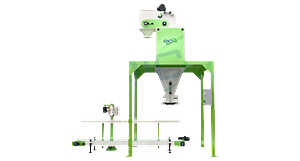
Finished Product Packing Scale
Weighs and packages the finished pellets into bags.
Conveying
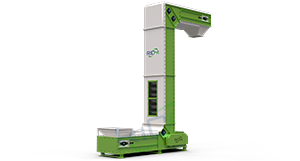
Bucket Elevator
Used for vertical lifting and transporting materials.
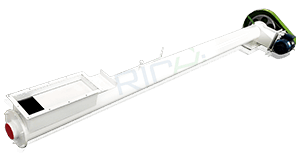
U-shaped Screw Conveyor
Designed for short-distance, horizontal or inclined transport of powdered materials.
Flanged Conveyor
Used for short-distance, high-angle transport of finished pellets.
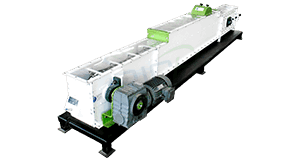
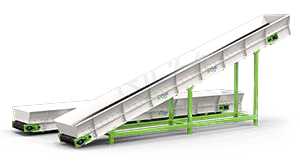
Belt Conveyor
Ideal for low-angle, high-capacity material transport.
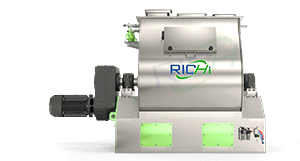
Mixing
High-Efficiency Mixer
Uses a turning and tossing method to evenly blend materials by lifting and dropping them.
Ribbon Mixer
Employs a left-and-right kneading action for faster and more uniform mixing of materials.
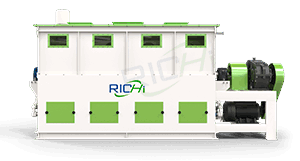
Single-Screw Ribbon Mixer
Single-Screw Ribbon Mixer is a type of horizontal mixing equipment used to blend dry powders, granules, and other materials efficiently.
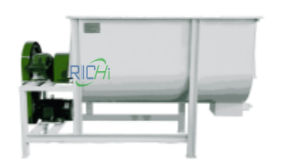
Horizontal Feed Mixer
The Horizontal Feed Mixer uses horizontal paddles or screw augers to ensure uniform mixing, ideal for large-scale feed production.
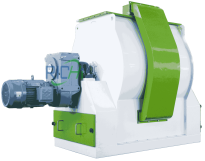
Feed Mixer Machine
Feed Mixer is a machine designed for mixing raw materials such as grains, additives, and other ingredients to produce animal feed.
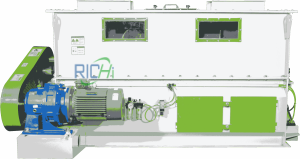
Silo
Biomass Raw Material Silo
Stores pretreated raw materials, ensuring a stable feed to the production line.

Finished Pellet Silo
Stores finished pellets, allowing smooth discharge for easy measurement and packaging.

Others
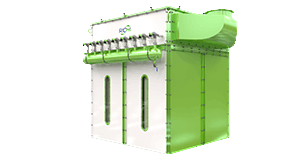
Dust Collection System
Environmental protection equipment for dust-generating processes such as crushing, mixing, and granulating, reducing workshop dust and protecting operators.
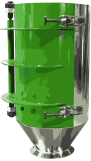
Permanent Magnet Drum
Permanent Magnet Drum is a type of magnetic separator that uses permanent magnets to remove ferrous materials from bulk solids, liquids, or powders.
FREQUENTLY ASKED QUESTION
If you have any questions about RICHI’s cow dung pellet making machine, please feel free to contact us. Our technical consultants are available to assist you. Below are some frequently asked questions and answers that may help.
Can the same machine product both fuel pellets and organic fertilizer pellets?
Yes. However, the machine’s configuration and process parameters must be adjusted based on the material and end use. For fuel pellets, a high-compression ring die is needed to increase density and calorific value, resulting in harder pellets. For organic fertilizer pellets, a low-compression ring die is used so pellets can break down easily in soil. Moisture requirements also differ: 13–18% for fuel pellets and 20–30% for organic fertilizer pellets.
Please clean the machine before switching materials to avoid cross-contamination. For higher efficiency, we recommend using separate equipment for each pellet type. If you need more details, please leave your contact information and our technical consultants will assist you.
How much does it cost to set up a cow dung pellet production line?
The cost depends on many factors, including production capacity, raw materials, desired output, and site conditions. Because each project is different, it’s difficult to give an exact price for a complete production line.
However, the pellet machine—the core equipment—typically ranges from $7,000 to $100,000. If you want an accurate quotation, please leave your contact details and our technical team will provide a customized estimate based on your specific requirements.
Must cow dung be fully decomposed before making organic fertilizer?What happens if it isn’t?
Yes. Cow dung must be fully decomposed before it can be used as organic fertilizer. Using raw dung can cause secondary fermentation in the soil, generating heat that may burn roots and affect seed germination. It can also increase pathogens, insect eggs, and weed seeds, leading to higher disease and pest risks.
In addition, nutrients like nitrogen and phosphorus in raw dung are mostly in organic form and are not easily absorbed by crops. This reduces fertilizer efficiency and may cause soil salinity and structural damage due to incomplete decomposition.
What are the uses of pellets made from cow dung?
Cow dung pellets can be used in several ways:
Substrate or feed – after composting with materials like rice straw, it can be used as mushroom substrate or as feed for certain insects.
Biomass fuel – for household heating, cooking, or industrial boilers, with high combustion efficiency and low emissions.
Organic fertilizer – rich in nitrogen, phosphorus, and potassium, it improves soil structure and fertility.
Is the maintenance cost of the cow dung pellet machine high?
No. RICHI cow dung pellet making machines are designed for efficiency and durability, so maintenance costs are generally low. They use imported motors and bearings, with core components made from 42CrMo steel, ensuring stable operation and strong wear resistance.
In addition, the machines are equipped with safety protection devices. If large hard materials enter the pelletizer, a safety pin will break to cut off power, preventing damage and reducing maintenance costs.