
High-efficiency equipment
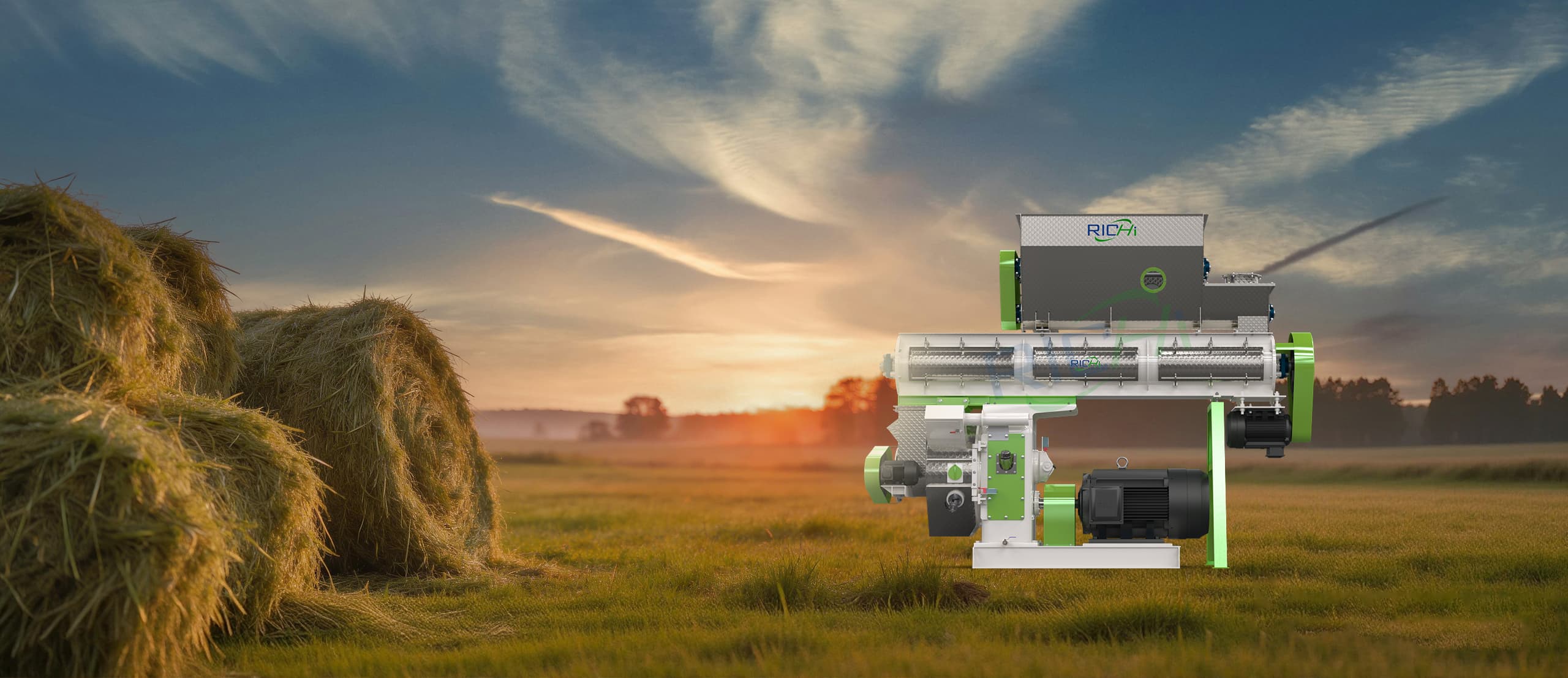
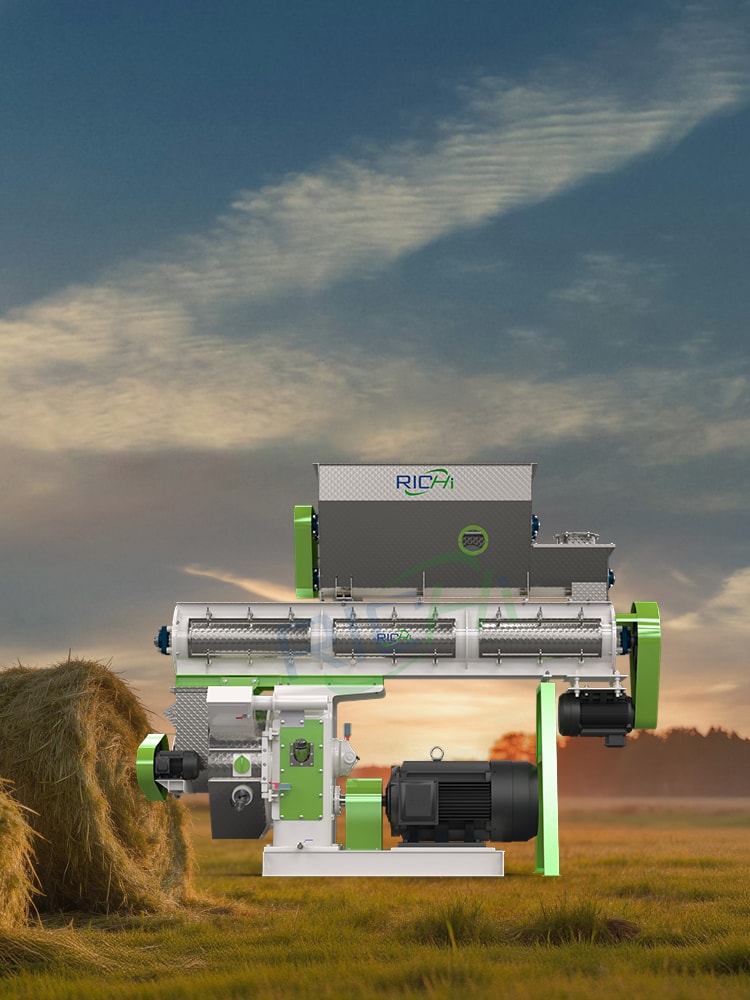
ALFALFA PELLET MACHINE
The alfalfa pellet machine is a specialized pelletizing device designed to convert alfalfa-related materials—including fresh alfalfa, loose hay, baled hay, and alfalfa powder—into high-quality feed and fuel pellets. It is the core equipment in a complete alfalfa pellet production line.
Single-machine output
0.5-8 T/H
Device Model
CZLH Series
APPLICATION OF ALFALFA PELLET MACHINE
Alfalfa is known for its high yield and rich nutritional profile, containing protein, active polysaccharides, vitamins, minerals, and other essential nutrients, making it an ideal feed ingredient. Additionally, its high yield and low environmental impact when burned make it a valuable renewable clean energy source.
The value of making alfalfa pellets
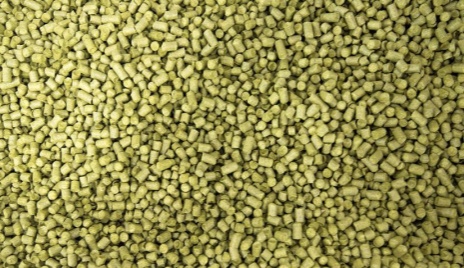
Alfalfa pellets provide excellent nutrition for livestock and poultry, boosting growth, improving feed palatability, and lowering farming costs. As a fuel, they offer significant environmental benefits by reducing carbon emissions, sulfur oxides, and nitrogen oxides compared to coal, helping to reduce air pollution and turn agricultural waste into economic value.
Where can it be applied?
Making feed pellet
Used in animal feed processing, alfalfa pellet exports, and feed production for large-scale farms.
Making fule pellet
Used in biomass fuel pellet plants, alfalfa cultivation areas, and the export of alfalfa fuel pellets.
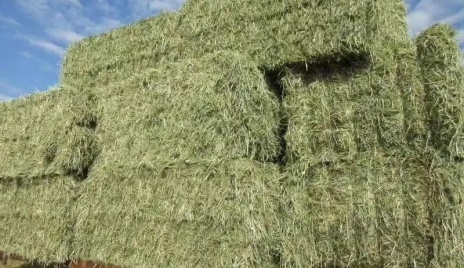
alfalfa Hay
Alfalfa Pellets

Fresh alfalfa
ALFALFA PELLET MACHINE STRUCTURE
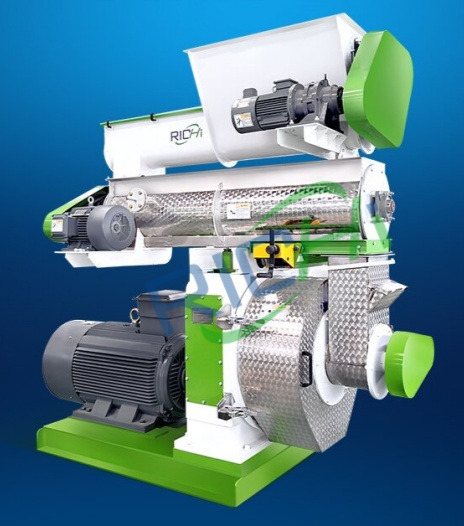
The alfalfa pellet machine is the core equipment for converting raw materials into pellets. It integrates key processes such as feeding, pelletizing, and power transmission, and is equipped with critical components including a ring die, rollers, cutter, forced feeder, anti-caking bin, Siemens motor, and SKF bearings.
Ring Die & Roller
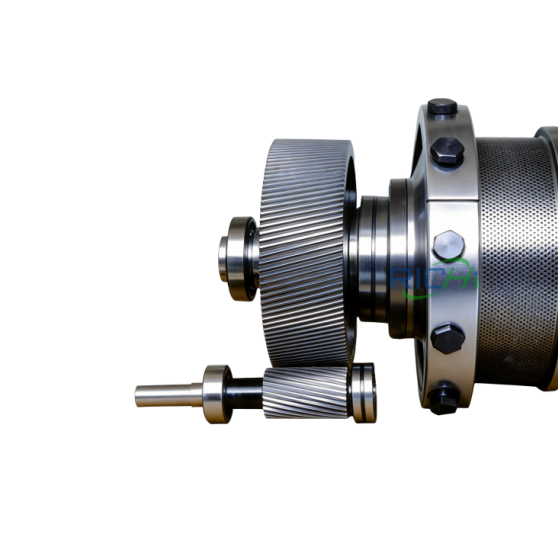
In an alfalfa pellet making machine, the ring die and rollers work in tandem to complete material extrusion and pellet formation. RICHI manufactures these components from 42CrMo steel, offering significantly higher wear resistance than conventional alloy or carbon steel.
Forced Feeder
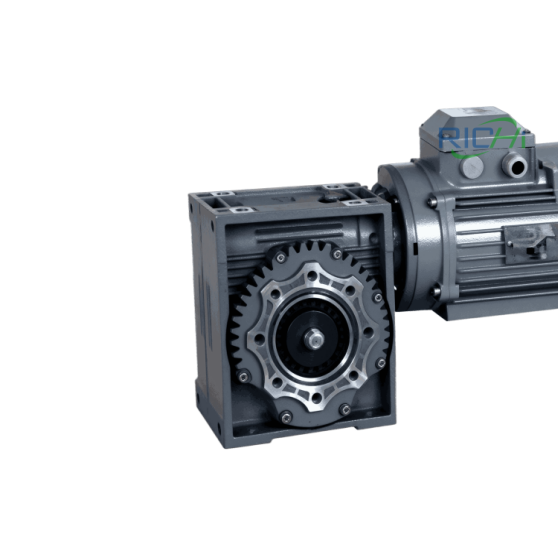
The forced feeder ensures a uniform and consistent supply of raw materials into the pelletizing chamber, maintaining stable operation and preventing quality issues caused by uneven feeding.
Siemens Motor
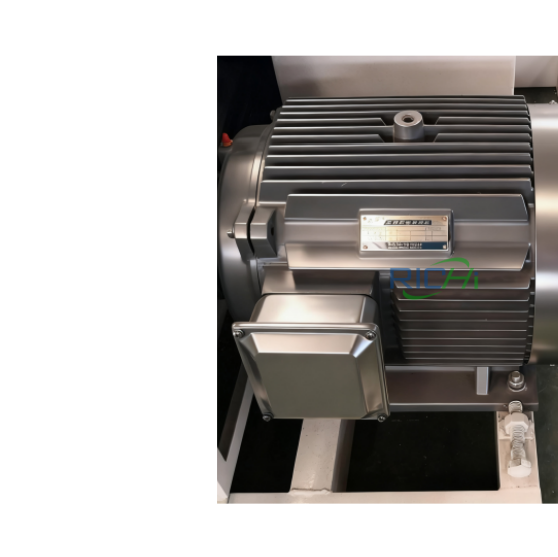
As the main drive system, Siemens motors are known for their high quality and operational stability, delivering strong and consistent power to support long-term, high-intensity operation. They serve as a core guarantee of the pellet machine’s efficiency, reliability, and continuous performance.
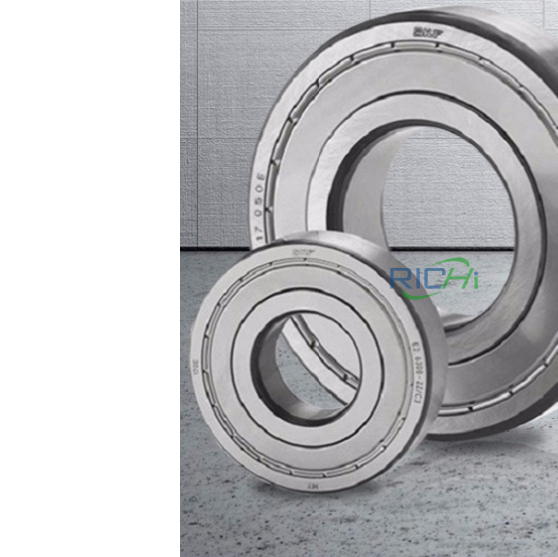
SKF Bearings
The equipment’s transmission components are fitted with high-quality imported SKF bearings, which help minimize friction losses, reduce noise, and enhance operational stability, ultimately extending the overall service life of the machinery.
ALFALFA PELLET MACHINE VIDEO SHOWCASE
The alfalfa pellet machine is not just a piece of equipment, but a key tool for improving pellet quality and increasing production efficiency. Below, we have prepared three videos to help you quickly understand the alfalfa pellet machine itself, as well as an actual alfalfa pellet production line.
VIDEO SHOWCASE

Click the button to watch the video.
Video Showcase
Click the button to watch the video.
Video Showcase
Click the button to watch the video.
ALFALFA PELLET MACHINE MODEL & PARAMETERS
To meet different customer needs, RICHI offers a range of pellet machines. The alfalfa pellet mill series includes six models, with capacities from 0.5 to 10 tons per hour. For more details, please contact us, and our technical team will recommend a suitable solution.
| Model | CZLH320 | CZLH350 | CZLH420 | CZLH520 | CZLH768 |
|---|---|---|---|---|---|
| Main motor power(KW) | 22 | 37 | 90 | 132 | 250 |
| Forced Feeder Power(KW) | 0.75 | 0.75 | 1.5 | 1.5 | 1.5 |
| Ring Die Diameter(MM) | 320 | 350 | 420 | 520 | 762 |
| Pellet Diameter(MM) | 4-12 | 4-12 | 4-12 | 4-12 | 4-12 |
| Output Capacity(T/H) | 0.5-0.6 | 1.0-1.2 | 1.8-2.0 | 3-5 | 5-7 |
WHY CHOOSE OUR ALFALFA PELLET MACHINE?
The RICHI alfalfa pellet machine is equipped with a Siemens main motor and features a ring die and rollers made of 42CrMo steel at its granulation core. Combined with a forced feeding system and anti-arch design, the machine delivers high output, excellent wear resistance, easy maintenance, and strong adaptability, making it ideal for large-scale production of feed and biomass pellets.
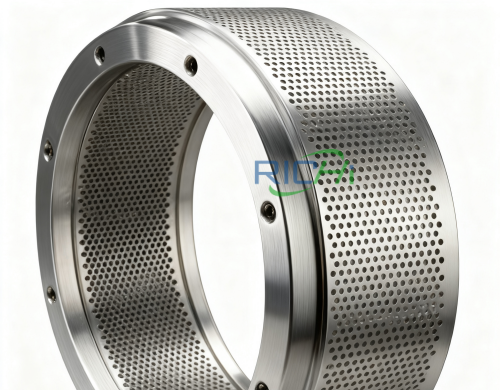
High and Stable Molding Rate
The ring die and rollers are precisely matched to ensure efficient compression, producing compact and uniform pellets. Tests show that the alfalfa pellets can achieve a molding rate of over 98%, with controllable density and hardness.
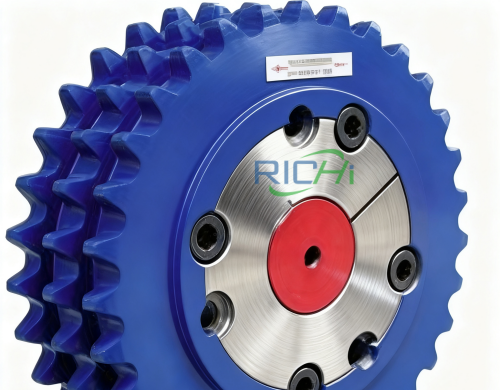
High output and Efficiency, Low Energy Consumption
The pellet machine uses a direct-drive system with precision-ground hard-toothed gears, providing high torque and about 15% higher productivity than belt transmission. Forced feeding with spiral distribution ensures uniform feeding, reduces jams and rework, and improves energy efficiency per unit.
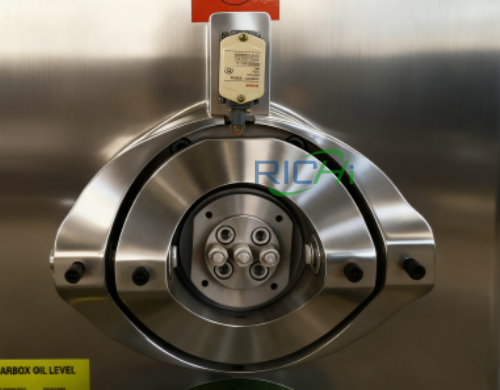
Extremely Low Wear and Failure Rate
Core components are made of 42CrMo steel, offering superior wear resistance compared to ordinary alloy or carbon steel. A safety pin prevents overloading, protecting the core parts, extending equipment life, and reducing unexpected maintenance costs.
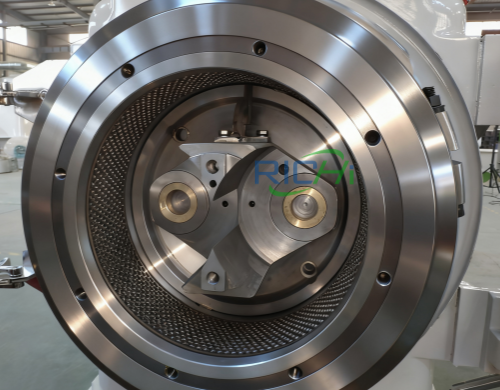
Strong Adaptability and Wide Application
It can process fresh alfalfa, alfalfa hay, crop residues, and mix grains and additives for feed production. With customizable die holes, it produces both feed pellets and biomass fuel pellets, making it suitable for both farming and energy applications.
HOW TO CHOOSE THE RIGHT ALFALFA PELLET MACHINE MODEL?
Selecting the right machine model involves evaluating four key factors: your raw materials,production scale, long-term goals, and budget. By clearly understanding these aspects, we can recommend the most suitable machine models—or even complete production line configurations—that align with your requirements.

Raw Materials
The condition and moisture content of raw materials can significantly impact both the processing steps and overall production efficiency.
Production Scale
Production scale determines the power needed for your pellet machine. A machine that’s too large may be underused, while one that’s too small may lack capacity.
Long-term Planning
Long-term planning is crucial. Consider whether your production needs might expand or if new production lines could be added within the next 1–3 years.
Budget
Balancing configuration and cost is essential. Overspending can strain your budget, while unnecessary features can increase costs and reduce efficiency.
Global Alfalfa Pellet Machine Project
RICHI Machinery’s products are available in over 140 countries and regions worldwide. As a leading manufacturer and exporter of pelletizing equipment, RICHI’s alfalfa pellet machine has become the core pelletizing solution for many of our customers.
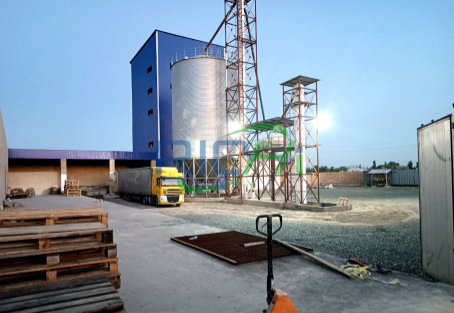

Russia 7-10T/H Project
This project is for a feed processing plant in Russia, producing cattle and sheep feed. The primary raw material is 40%-80% alfalfa, supplemented with corn, wheat, and other grains.
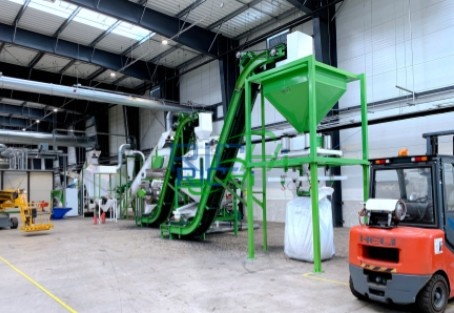

Kazakhstan 1T/H Project
This production line focuses on cattle and sheep feed, utilizing the RICHI CZLH series 350 model. The main raw material is 50% alfalfa, along with other grains and additives.
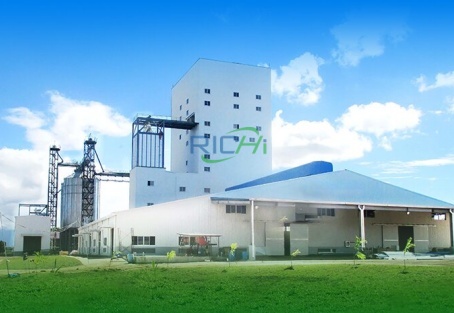

Uzbekistan 2T/H Project
Initiated by a biofertilizer plant in Uzbekistan, this project primarily produces biofertilizers using alfalfa as the main raw material, with the 420 model machine.
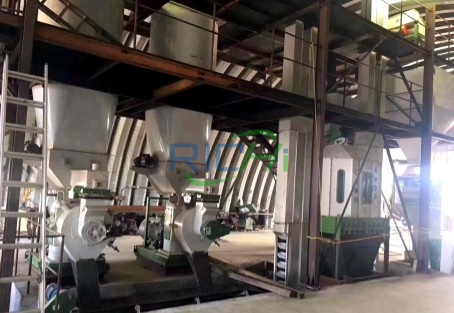

Mexico 5-7T/H Project
This new factory processes alfalfa fuel pellets using alfalfa, straw, sawdust, and other materials. As a startup, they customized a full production line with RICHI machinery.
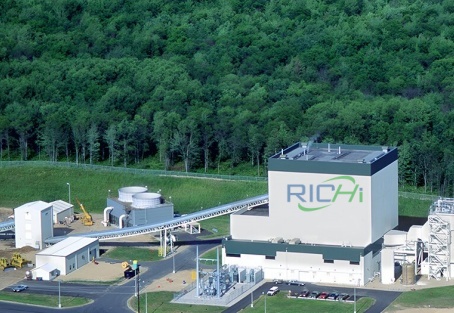

Turkey 3-5T/H Project
Launched in January 2025, this production line supports agriculture by processing alfalfa-related waste. The project has boosted the client’s economic efficiency.
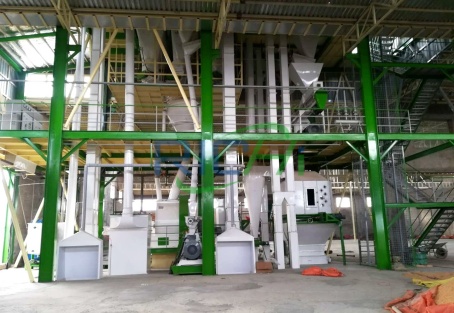

Thailand 7-10T/H Project
Designed to maximize alfalfa resource utilization, this project includes RICHI’s 858 and 520 pellet machines, along with a forage crusher, cooler, and packaging equipment.
All of our clients have praised RICHI machinery for its exceptional quality and comprehensive service. RICHI has earned their trust and support, making it the choice for quality, reliability, and efficiency.
DIVERSE PELLETIZER SOLUTION FOR EVERY INDUSTRY NEED
RICHI Machinery is dedicated to meeting customer needs by designing biomass pellet machines tailored to the specific characteristics of different raw materials, ensuring the production of high-quality pellets. Our range includes bagasse, cassave, straw, grass, and bamboo pellet machines, among others.


Bagasse Pellet Machine
A bagasse pellet machine is designed to pelletize sugarcane bagasse and similar fibrous residues into dense biomass pellets. The pellets are suitable for industrial boilers and biomass power plants, offering stable combustion and efficient energy utilization.

Cassave Pellet Machine
A cassava pellet machine processes cassava chips, powder, and residues into uniform pellets. Thanks to the high starch content, cassava pellets show excellent pellet quality and are widely used in animal feed and biomass energy applications.
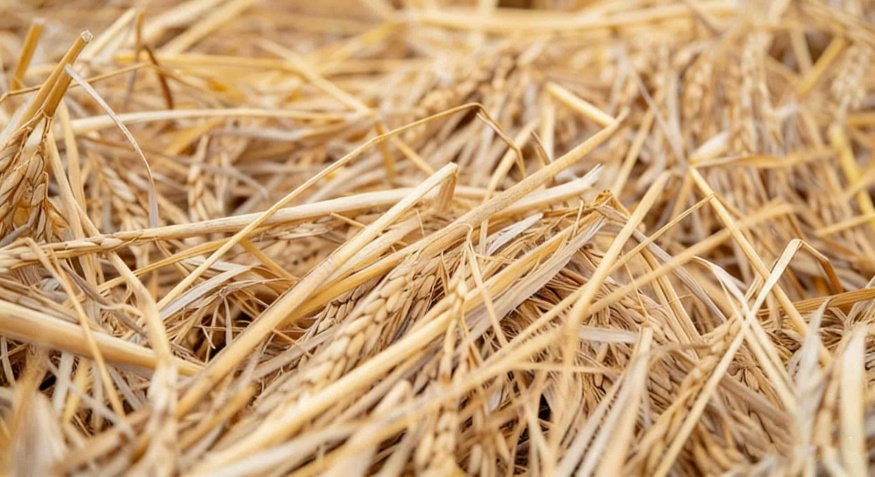
Straw Pellet Machine
A straw pellet machine is designed to convert various types of crop straw into pellets. Common raw materials include corn, wheat, sorghum, and cotton straw. The resulting pellets burn steadily with minimal smoke and dust, making them an eco-friendly and renewable energy source.
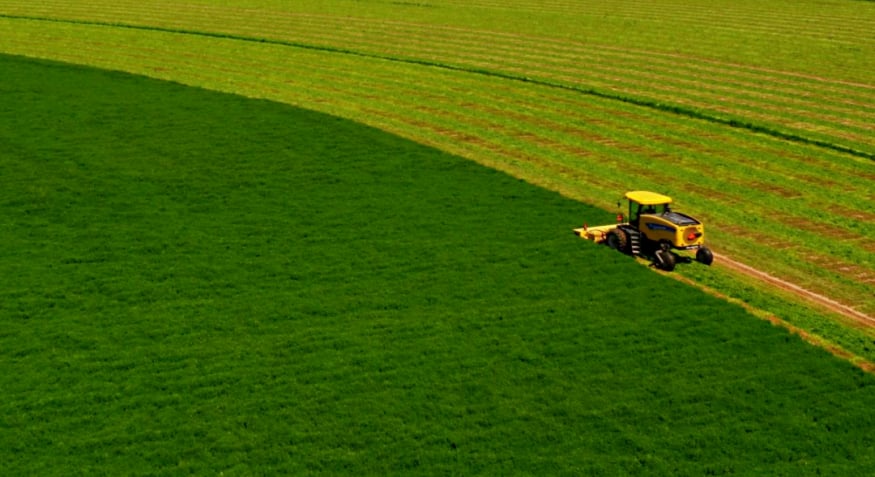
GRASS Pellet MAKING Machine
A grass pellet making machine is used to compress ground forage into uniform feed pellets, enhancing palatability and improving feed utilization efficiency. The finished pellets have high density, allowing for convenient storage and transportation while reducing material loss. It is widely applied in livestock farming and feed processing industries.

Bamboo Pellet Machine
A bamboo pellet machine converts bamboo sawdust, chips, and processing waste into high-density biomass pellets. The finished pellets feature high calorific value and clean combustion, ideal for heating systems and biomass power generation.
COMPREHENSIVE ALFALFA PELLET PRODUCTION LINE OVERVIEW
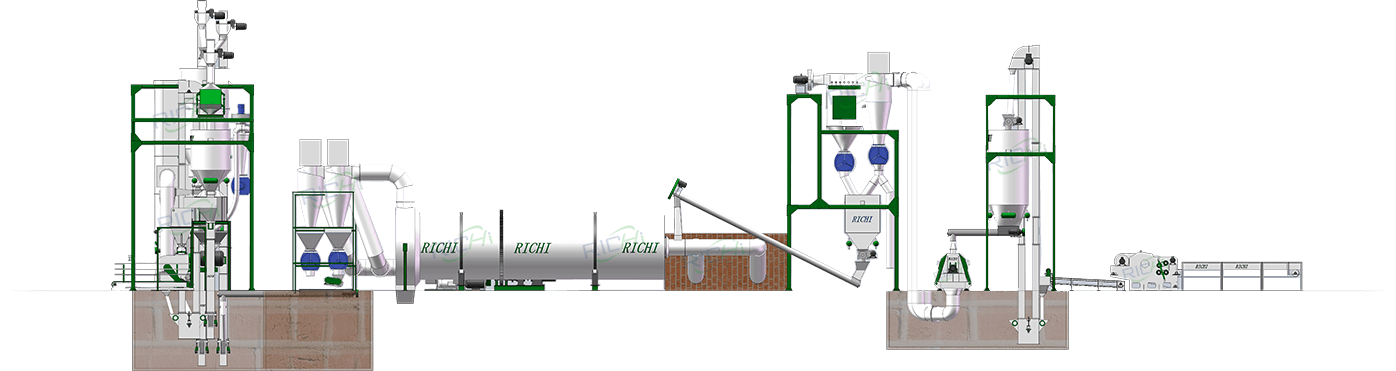
RICHI Machinery offers not only standalone alfalfa pellet machines but also fully customized, automated alfalfa pellet production lines. These lines cover the entire process, from raw material handling to final pellet packaging and delivery. In addition to the pelletizing machine, the complete production line includes steps such as cleaning, crushing, mixing, drying, cooling, screening, and packaging, as outlined below:
01
Cleaning Stage
Remove impurities like nails and stones to prevent accidents and reduce maintenance costs.
02
Crushing Stage
Crush the raw materials into 3-5mm pieces to facilitate drying and pelletizing.
03
Mixing Stage
Evenly mix the materials and additives to ensure the alfalfa feed pellets are nutritionally balanced.
04
Drying Stage
Control moisture content between 13%-18% for optimal pelletizing results.
05
Pelletizing Stage
Pellets are formed by the combined operation of the ring die and rollers, ensuring uniform size.
06
Cooling Stage
Cool the freshly made pellets (approx. 80°C) to enhance hardness and wear resistance.
07
Screening and Packaging Stage
Screen out powder and broken pellets to maintain the quality of the finished product.
08
Other Auxiliary Stages
Auxiliary components such as conveyors, storage, and dust removal support the production process.
Production Line Equipment powerhouse
Alfalfa pellet production requires not only the core pelletizing equipment but also a range of auxiliary machines to complete the process. We provide a complete set of production line equipment. In addition to offering individual machines for sale, we also design and configure production lines tailored to the specific characteristics of raw materials, production scale, and factory conditions. Below are the related equipment we offer.
Crushing
Bale Breaker
Breaks up compressed bales of straw.

Forage Crusher
Crushes forage into 3-5 mm grass powder.

Drying
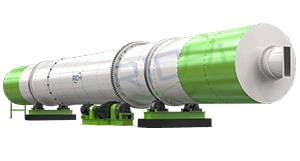
Tumble Dryer
Reduces the moisture content of wet materials to around 15%.
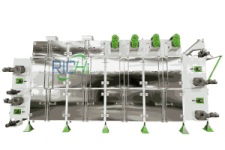
Belt Dryer
A belt dryer uses a conveyor belt and hot air to dry materials continuously.
Cooling
Counterflow Cooler
Cools the finished pellets to near room temperature.
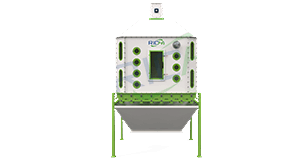
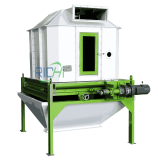
Pellet Cooler
Used to reduce the temperature of finished pellets.
Screening
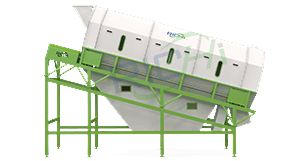
Vibrating Screen
Removes powder and broken particles from the finished pellets.
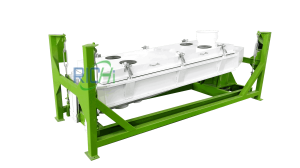
Rotary Grading Screen
Rotary Grading Screen is a cylindrical screening device that uses a rotating drum to separate and classify materials based on size.
Packing
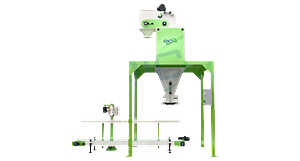
Finished Product Packing Scale
Weighs and packages the finished pellets into bags.
Conveying
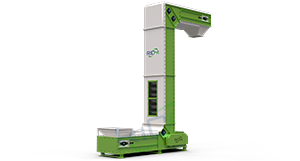
Bucket Elevator
Used for vertical lifting and transporting materials.
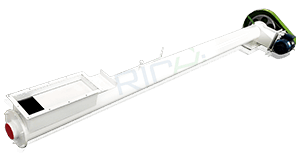
U-shaped Screw Conveyor
Designed for short-distance, horizontal or inclined transport of powdered materials.
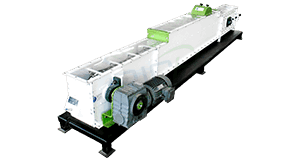
Flanged Conveyor
Used for short-distance, high-angle transport of finished pellets.
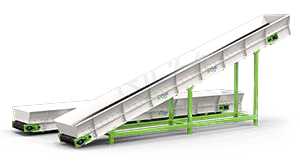
Belt Conveyor
Ideal for low-angle, high-capacity material transport.
Mixing
High-Efficiency Mixer
Uses a turning and tossing method to evenly blend materials by lifting and dropping them.
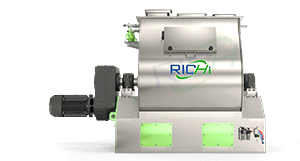
Ribbon Mixer
Employs a left-and-right kneading action for faster and more uniform mixing of materials.
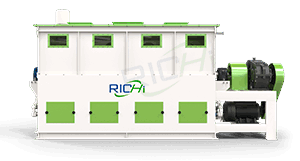
Single-Screw Ribbon Mixer
Single-Screw Ribbon Mixer is a type of horizontal mixing equipment used to blend dry powders, granules, and other materials efficiently.
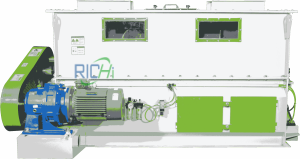
Horizontal Feed Mixer
The Horizontal Feed Mixer uses horizontal paddles or screw augers to ensure uniform mixing, ideal for large-scale feed production.
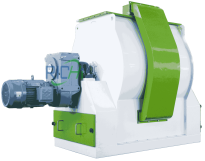
Feed Mixer Machine
Feed Mixer is a machine designed for mixing raw materials such as grains, additives, and other ingredients to produce animal feed.
Silo
Biomass Raw Material Silo
Stores pretreated raw materials, ensuring a stable feed to the production line.

Finished Pellet Silo
Stores finished pellets, allowing smooth discharge for easy measurement and packaging.

Others
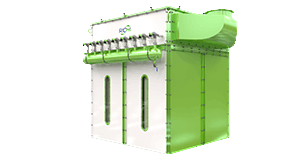
Dust Collection System
Environmental protection equipment for dust-generating processes such as crushing, mixing, and granulating, reducing workshop dust and protecting operators.
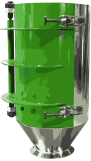
Permanent Magnet Drum
Permanent Magnet Drum is a type of magnetic separator that uses permanent magnets to remove ferrous materials from bulk solids, liquids, or powders.
Frequently Asked Question
If you have any questions about the alfalfa pellet machine, feel free to contact us. Our technical experts are ready to provide detailed answers.
What are the advantages of alfalfa pellets?
Alfalfa pellets are widely used in animal feed, biomass energy, and organic fertilizers. Unlike raw alfalfa or hay, pellets solve many challenges related to feeding, storage, transportation, and application. They offer balanced nutrition for animals, more efficient fuel combustion, improved fertilization, and easier handling, ultimately saving both time and costs.
What raw materials can the alfalfa pellet machine process?
RICHI’s alfalfa pellet machine can process not only alfalfa-based materials but also wood chips, straw, crop husks, organic fertilizers, and animal feed. Its adaptability to various raw materials, when paired with the appropriate auxiliary equipment, makes it ideal for diverse production lines, delivering significant economic benefits.
What is the configuration of the alfalfa pellet machine?
The alfalfa pellet machine includes key components such as the ring die, pressure rollers, cutters, forced feeders, anti-caking bins, Siemens motors, and SKF bearings. The core parts are made from 42CrMo, a high-wear-resistant material, ensuring stable and efficient long-term operation.
Does the alfalfa pellet mill use a ring die or flat die?
RICHI’s alfalfa pellet mill uses a ring die, which offers higher production capacity and improved processing efficiency. The high-precision pressure roller ensures consistent pellet quality, with uniform density and hardness. This makes it suitable for various production scales with high output and efficiency.
What are the processing prospects of alfalfa pellets?
Alfalfa pellets are highly versatile and can be used in feed, biomass energy, and organic fertilizers. With its rich nutritional content—high in protein, vitamins, and minerals—alfalfa is valuable for animal feed and clean fuel. As a fertilizer, it improves soil structure, making it an excellent organic material. Given these benefits, the future of alfalfa pellet processing looks promising.

